
*What Is the Average Income of a Personal Chef?

One of the biggest misconceptions about the personal chef business is that there is a fixed salary or hourly wage attached to the profession.
There is not.
Personal chefs usually charge by the service, not by the hour, which means income varies widely depending on:
- number of clients
- service type
- pricing structure
- schedule
- geography
- demand
- whether the chef works alone or hires help
That flexibility is one of the reasons many people are drawn to the business in the first place.
How Personal Chefs Typically Make Money
Most personal chefs combine multiple income streams instead of relying on one type of service.
The most common include:
- weekly meal prep
- private dinner parties
- cooking classes
- small events
- seasonal holiday work
- specialty dietary services
Meal prep tends to become the foundation because recurring weekly clients create more predictable income.
Private events and cooking classes are often layered on top of that base schedule.
What Meal Prep Clients Typically Pay
Meal prep pricing varies heavily by city, experience level, and number of servings prepared during the cook session.
In many areas, personal chefs charge somewhere between $200 and $400 per cook session for weekly meal prep services.
That pricing usually does not include groceries.
Most weekly clients schedule recurring sessions, which means one household can generate consistent monthly revenue over long periods of time.
Monday through Thursday are typically the busiest meal prep days because clients want meals prepared before the workweek becomes chaotic.
Dinner Parties and Private Events Often Increase Income Faster
Weekend dinner parties can dramatically change a chef’s monthly revenue.
Saturday evenings are the most requested nights.
Private events could involve:
- more prep
- longer service windows
- additional rentals or staffing
- menu customization
- plating and presentation expectations
The operational workload increases, but so does the pricing.
Some chefs avoid events entirely and focus only on recurring meal prep households. Others build most of their business around private dining experiences.
Part-Time vs Full-Time Personal Chef Income
This is where income conversations become misleading online.
Someone cooking:
- two days per week
- for three recurring households
- with no events
will produce completely different numbers than someone:
- operating five or six days weekly
- booking private events
- teaching cooking classes
- hiring assistants
- cooking for multiple households per day
The business can function:
- part-time
- full-time
- seasonally
- alongside another career
Some chefs intentionally cap their schedule to preserve work-life balance. Others scale aggressively and build teams.
The income ceiling changes based on your decisions.
Why Some Personal Chefs Stay Booked While Others Struggle
Cooking ability alone rarely determines business growth.
The chefs who stay consistently booked usually become strong in operational areas like:
- communication
- scheduling
- referrals
- consultation flow
- menu planning
- reliability
- client retention
Clients are paying for convenience and consistency as much as the food itself.
A chef who creates a low-stress client experience often outperforms someone technically stronger in the kitchen but disorganized operationally.
Weekly Recurring Clients Create Stability
Recurring meal prep clients usually create the most stable income structure because they reduce the constant pressure of finding new work every week.
After enough time in business, many chefs build recurring schedules where clients stay for months or years.
That consistency changes:
- grocery planning
- scheduling efficiency
- income predictability
- referral opportunities
Long-term clients also tend to generate the highest-quality referrals because new clients already trust the recommendation before the consultation even happens.
What New Personal Chefs Often Misunderstand About Income
Many aspiring chefs assume they need:
- a restaurant background
- culinary school
- investors
- expensive equipment
- a commercial kitchen
before charging professionally.
Most personal chefs begin much smaller.
One client becomes two. Two become recurring referrals. Over time, your scheduling systems improve, menus become easier to manage, and pricing becomes easier and with confidence.
FAQ
How much do personal chefs charge for meal prep?
Many personal chefs charge between $200 and $400 per cook session depending on area, experience, and number of servings.
Do personal chefs charge hourly?
Most personal chefs charge by the service rather than by the hour.
Can a personal chef business be part-time?
Yes. Many chefs operate part-time schedules while others build full-time businesses around recurring meal prep clients and private events.
What services make the most money for personal chefs?
Recurring meal prep clients create stable income while private dinner parties and events often increase overall revenue faster.
Related Reading
Personal Chef vs Private Chef: What’s the Difference?
How long does it take to become a personal chef?
Resources
Weekly Workflow Template: How to Run a Personal Chef Business →
Meal Prep Business: Client Consultation System for Personal Chefs →

10 Things to Do Before Starting Your Personal Chef Business
Ten-Step Actionable Checklist of things to do before investing in this new business so you're prepared when your first paying client comes along.
for Free
Personal Chef Mentor

Virginia Stockwell
Virginia Stockwell is a personal chef business mentor from California, now living in Austin, TX. She's had careers as a chiropractor and Realtor, then finally found her calling as a personal chef. Starting in catering in 2005, she began her personal chef business in 2012, quickly growing to a waiting list of clients thanks to her local marketing expertise. She now empowers home cooks and professional chefs to start their own meal prep and dinner party businesses, creating a life of hours and income they control. She lives the life of a minimalist both personally and professionally, reads cookbooks like novels, and is locally famous for her taco and margarita parties (check out "A Taco Walks into a Bar" on Amazon).
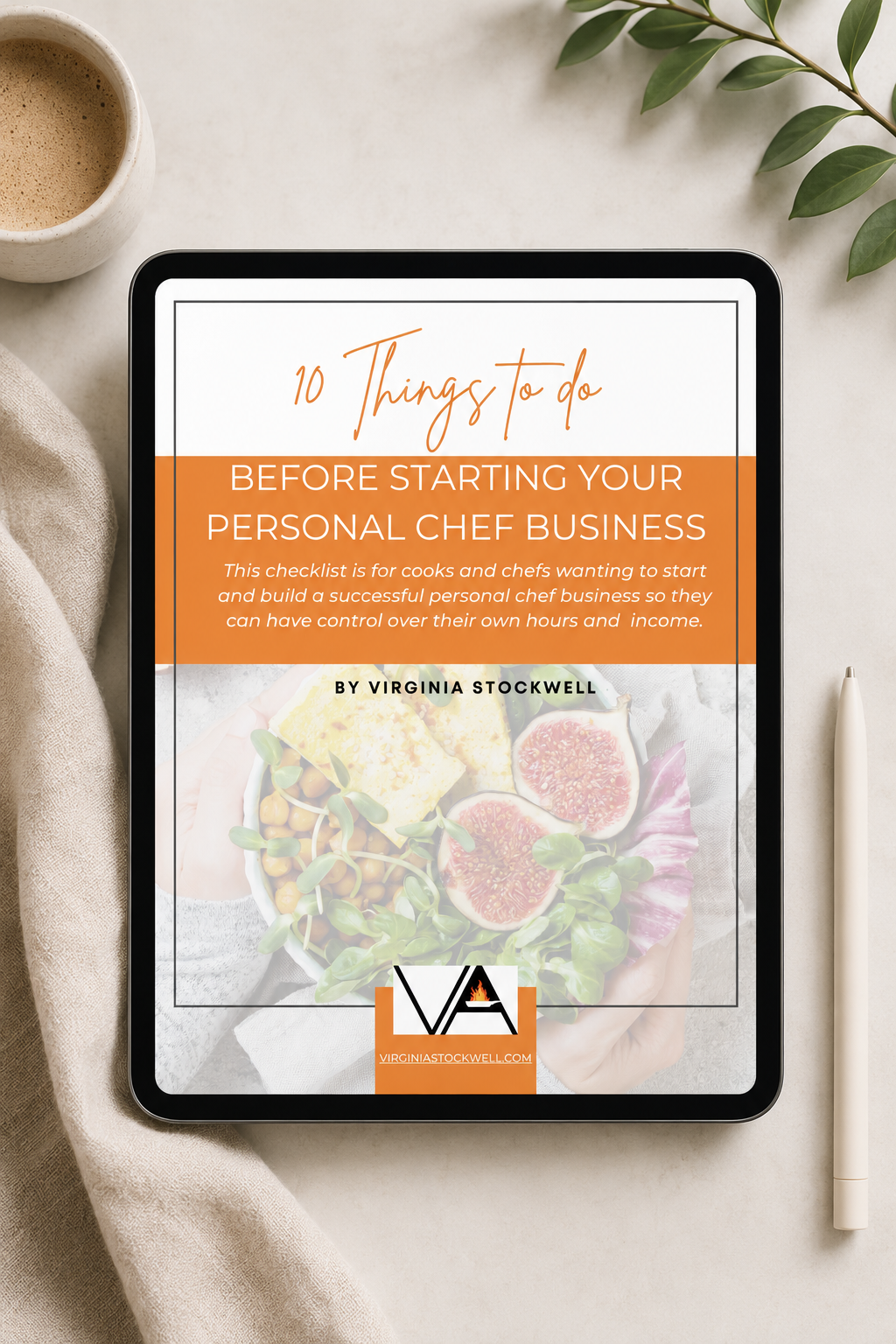
10-Step Actionable Checklist
FREE DOWNLOAD
10-Step Actionable Checklist
You've always said that "someday" you'll start that meal prep or dinner party business, but where do you begin?