
*Concentrate on the Business, Not the Business Cards
A lot of new personal chefs spend more time adjusting branding assets than speaking to potential clients.
I’ve seen new chefs pour hours into logos, website colors, Canva graphics, chef coat embroidery, and business card details before they have tested pricing, practiced consultations, or started building referral relationships.
Meanwhile, chefs with basic branding often move faster because they are learning from paying clients. They are hearing objections, noticing what households request repeatedly, adjusting menus, refining scheduling, and figuring out how the business works once someone is actually paying for the service.
A brand can support a business. It cannot replace one.
How Personal Chef Businesses Get Clients Early On
Most personal chef businesses begin through:
- referrals
- conversations
- local relationships
- repeat clients
- word-of-mouth marketing
Very few families hire a meal prep chef because the branding package looked expensive.
They hire someone who:
- responds professionally
- understands their household
- communicates well
- shows up consistently
- makes their life easier
Operational trust creates referrals much faster than visual branding during the beginning stages of a service business.
Branding Usually Changes After Working With Clients
This is where many new personal chefs get stuck.
They assume they already know:
- their target market
- ideal pricing
- preferred services
- best client type
- strongest niche
before working with enough paying clients to confirm any of it.
Then reality happens.
A chef who thought they wanted luxury dinner parties discovers recurring meal prep clients are far more stable.
Another chef builds branding around fitness clients and later realizes busy families become their strongest referral source.
Some chefs discover they enjoy:
- dietary specialization
- postpartum meal prep
- senior meal services
- athlete nutrition
- small events
more than the business model they originally imagined.
When the business direction changes, the branding usually changes with it.
Why Early Branding Can Slow Business Growth
Many new chefs delay client outreach because they feel the business still looks unfinished.
Meanwhile:
- there is no website yet
- the logo is still being revised
- the business cards are delayed
- social media is inconsistent
- colors are being reconsidered
None of those issues prevent someone from booking a consultation.
But waiting for everything to feel complete often delays the operational experience that would improve the business fastest.
The first clients teach things no branding exercise can predict.
What New Personal Chefs Should Focus On First
The beginning stage of a personal chef business usually benefits more from:
- getting consultations
- learning kitchen workflow
- pricing services
- handling scheduling
- building repeat business
- understanding client communication
- refining menus
- improving efficiency inside client homes
Those operational skills directly affect:
- retention
- referrals
- profitability
- scheduling capacity
- long-term stability
A chef with average branding and strong operations usually outperforms a chef with beautiful branding and weak systems.
When Branding Starts Becoming More Important
Branding becomes more valuable once:
- services are established
- pricing feels stable
- the target client becomes obvious
- referrals are increasing
- operational systems exist
At that stage, branding can help reinforce reputation and positioning because the business direction has already been tested through actual client experience.
That timing reduces the chances of rebuilding everything six months later.
The Difference Between Looking Established and Being Established
Many businesses can appear successful online long before they are operationally stable.
A professionally designed website does not automatically mean:
- profitable pricing
- client retention
- strong referrals
- efficient scheduling
- repeat bookings
The strongest service businesses usually become recognizable because operations improved first.
Branding later amplifies that reputation.
The Personal Chef Business in 10 Weeks
Client consultations, pricing, referrals, scheduling, workflow systems, meal prep operations, and marketing strategy are covered inside the Personal Chef Business in 10 Weeks program.
Program details are available here >>
FAQ
Should a new personal chef focus on branding first?
Most new personal chefs benefit more from client experience, referrals, and operational systems before heavily investing in branding.
Do personal chefs need a professional logo before getting clients?
Many personal chefs book their first clients through referrals and conversations long before developing a full brand identity.
What helps personal chef businesses grow early on?
Referrals, consistency, communication, scheduling systems, and strong client experiences often drive growth faster than branding assets.
Related Reading
What Is the Average Income of a Personal Chef?
I Don’t Have the Money to Start a Personal Chef Business (What It Really Costs)
Resources
Personal Chef Business in 10 Weeks, Full Program →
Personal Chef Branding Guide: Private Chefs & Meal Prep Businesses →

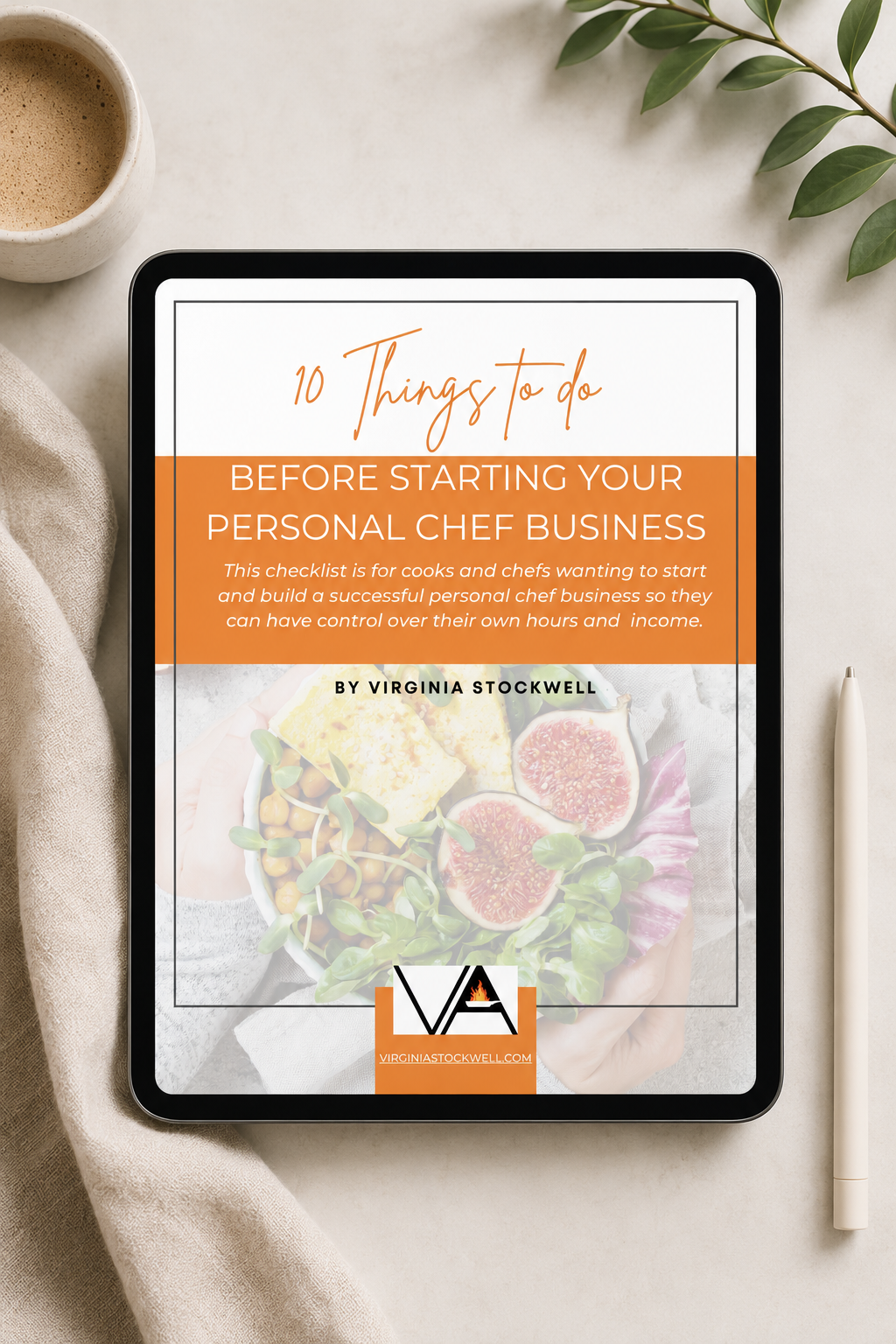
10 Things to Do Before Starting Your Personal Chef Business
Ten-Step Actionable Checklist of things to do before investing in this new business so you're prepared when your first paying client comes along.
for Free
Personal Chef Mentor

Virginia Stockwell
Virginia Stockwell is a personal chef business mentor from California, now living in Austin, TX. She's had careers as a chiropractor and Realtor, then finally found her calling as a personal chef. Starting in catering in 2005, she began her personal chef business in 2012, quickly growing to a waiting list of clients thanks to her local marketing expertise. She now empowers home cooks and professional chefs to start their own meal prep and dinner party businesses, creating a life of hours and income they control. She lives the life of a minimalist both personally and professionally, reads cookbooks like novels, and is locally famous for her taco and margarita parties (check out "A Taco Walks into a Bar" on Amazon).
10-Step Actionable Checklist
FREE DOWNLOAD
10-Step Actionable Checklist
You've always said that "someday" you'll start that meal prep or dinner party business, but where do you begin?