
*Self-Doubt Keeps Many Personal Chefs From Starting
Fear and self-doubt stop many aspiring personal chefs long before pricing, marketing, or cooking ability become the issue.
The hesitation usually starts earlier.
Someone considers offering meal prep services, then immediately begins questioning whether anyone would hire them, whether their food is good enough, or whether they know enough to charge professionally. Weeks pass researching the business while avoiding the parts that would answer those questions fastest: talking to potential clients, scheduling consultations, testing demand, and cooking for paying households.
How Self-Doubt Shows Up in the Personal Chef Business
Most people do not describe it as fear.
It usually appears as:
- overpreparing
- delaying decisions
- endlessly adjusting pricing ideas
- rebuilding websites before getting clients
- researching equipment instead of marketing services
The thinking sounds practical on the surface.
Meanwhile, the business never moves forward.
Why New Personal Chefs Question Their Skills
Working professionally inside someone’s home feels different from cooking for family or friends.
That difference creates pressure around:
- performance
- expectations
- money
- consistency
- client satisfaction
A lot of new personal chefs assume experienced chefs no longer question themselves. After years in business, I can tell you that uncertainty still appears. The difference is that experienced business owners stop treating uncertainty like a stop sign.
They continue operating anyway.
Fear Often Pushes People Back Toward Familiar Situations
A stable paycheck, familiar schedule, and predictable routine feel safer than trying to build a service business from scratch.
Because of that, many aspiring chefs begin rationalizing why staying where they are makes more sense:
- “Maybe people in my area would never pay for this.”
- “Maybe I need more certifications first.”
- “Maybe I should wait another year.”
Some caution is reasonable. Endless hesitation usually becomes expensive over time because the business experience never develops.
Why Experience Changes Confidence Faster Than Research
Confidence around pricing, consultations, kitchen workflow, and client communication usually improves after repetition.
The first consultation may feel uncomfortable.
After enough client conversations, you stop analyzing every sentence and start paying attention to operational details instead:
- grocery timing
- food storage
- family preferences
- kitchen layout
- scheduling efficiency
That progression happens through exposure, not preparation alone.
Many Aspiring Personal Chefs Spend Too Much Time Trying to Feel Ready
The personal chef business attracts people who care deeply about doing good work. That can become a problem when perfectionism delays action.
Some people convince themselves they need:
- advanced culinary credentials
- expensive branding
- a flawless website
- expert-level cooking skills in every cuisine
Most clients are not evaluating your business that way.
They want meals handled reliably. They want their evenings easier. They want someone organized enough to work inside their home without creating stress.
Marketing Usually Determines Growth More Than Cooking Ability
One of the more frustrating parts of the personal chef business is realizing that excellent cooking alone rarely guarantees steady clients.
Visibility, communication, referrals, follow-up, scheduling systems, and professionalism affect growth much more than many chefs expect initially.
A chef with solid systems and average marketing skills usually outperforms someone highly talented who stays invisible.
FAQ
Why do aspiring personal chefs struggle with self-doubt?
Many people question whether they are experienced enough, skilled enough, or prepared enough to charge professionally.
Does confidence come before starting a business?
Usually the opposite. Confidence tends to improve through repetition and operational experience.
What holds most personal chefs back from starting?
Fear around uncertainty, income, client expectations, and visibility tends to delay action more than cooking ability.
Related Reading
Why You Keep Hesitating to Start Your Personal Chef Business
How to Get Your First Personal Chef Client
10 Mistakes I Made Starting My Personal Chef Business
Resources

10 Things to Do Before Starting Your Personal Chef Business
Ten-Step Actionable Checklist of things to do before investing in this new business so you're prepared when your first paying client comes along.
for Free
Personal Chef Mentor

Virginia Stockwell
Virginia Stockwell is a personal chef business mentor from California, now living in Austin, TX. She's had careers as a chiropractor and Realtor, then finally found her calling as a personal chef. Starting in catering in 2005, she began her personal chef business in 2012, quickly growing to a waiting list of clients thanks to her local marketing expertise. She now empowers home cooks and professional chefs to start their own meal prep and dinner party businesses, creating a life of hours and income they control. She lives the life of a minimalist both personally and professionally, reads cookbooks like novels, and is locally famous for her taco and margarita parties (check out "A Taco Walks into a Bar" on Amazon).
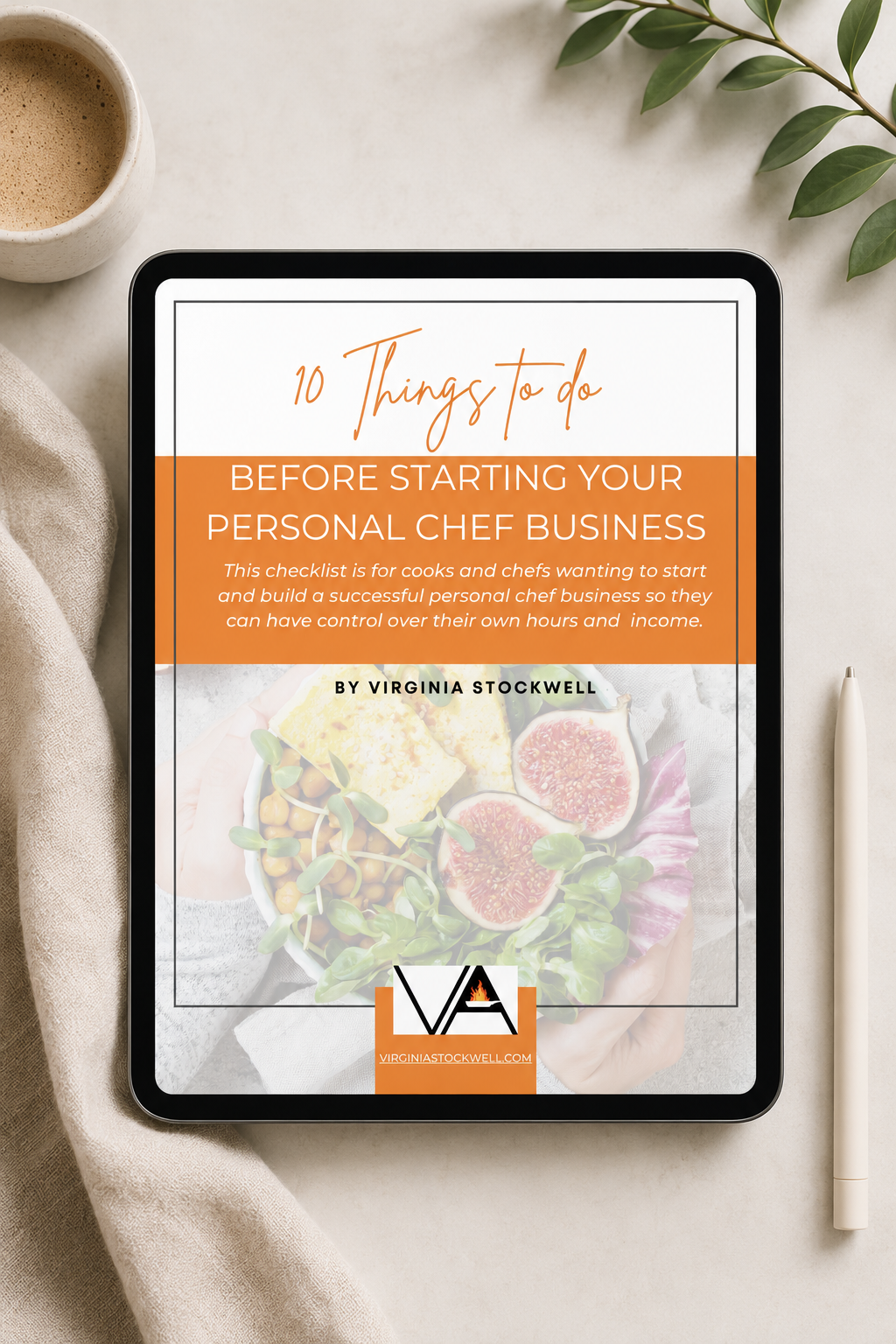
10-Step Actionable Checklist
FREE DOWNLOAD
10-Step Actionable Checklist
You've always said that "someday" you'll start that meal prep or dinner party business, but where do you begin?