
*10 Mistakes I Made Starting My Personal Chef Business

When I first started my personal chef business, I made a lot of mistakes involving pricing, scheduling, clients, workflow, and professionalism. Some cost me time. Some cost me confidence. Most came from learning the business through trial and error instead of real-world guidance.
Today, AI tools like ChatGPT can help organize information and answer general questions quickly, but many parts of the personal chef business only become clear through working with clients and solving problems in real kitchens.
Here are the biggest mistakes I made and what I learned from them.
#1 Charging by the Hour
For my very first client, I charged $25 an hour.
At first, that seemed reasonable. But as I became faster and more efficient, I realized I was still making the same amount.
I was thinking like an employee instead of a business owner.
Personal chefs do not typically price their services by the hour. They also do not price like restaurants because clients pay separately for groceries.
If you are struggling with pricing, read this next: How to Price Personal Chef Services
#2 Accepting Every Client
Not every client is a good fit.
Some clients have dietary needs, schedules, expectations, or personalities that do not align with your business model.
Learning how to identify the right clients is one of the biggest shifts from “someone who cooks” to “someone running a business.”
#3 Not Understanding My Target Market
When you try to market to everyone, your message becomes weak.
Understanding your ideal client changes:
- Your messaging
- Your services
- Your pricing
- Your schedule
The clearer you are about who you help, the easier it becomes to attract the right clients.
#4 Thinking Portions Were Universal
One serving does not mean the same thing for every person.
Cooking for an athlete, a teenager, or an older adult requires very different quantities.
Portioning took trial and error to learn because personal chef work is much more individualized than restaurant or institutional cooking.
#5 Not Presenting Myself Professionally
Professionalism matters more than I realized.
A professional personal chef:
- Shows up on time
- Responds promptly
- Has a clean vehicle
- Wears professional clothing
- Uses organized menus and systems
Clients notice these things.
Professionalism often leads to referrals without much additional marketing effort.
#6 Thinking Clients Wanted Fancy Food
I originally thought clients hired personal chefs because they wanted elaborate meals.
Most did not.
What many clients actually wanted was:
- Healthy meals
- Convenience
- Less stress
- Easier evenings
They were hiring me to simplify their life, not impress dinner guests every night.
#7 Not Testing Recipes Before Client Sessions
I definitely tested recipes on clients that should have been tested at home first.
Clients are paying for consistency. Testing recipes beforehand helps avoid timing, storage, and reheating problems during cook sessions.
#8 Trying to Do Everything in One Day
Early on, I tried to:
- Create menus
- Write grocery lists
- Gather equipment
- Shop for groceries
- Create timelines
- Complete the cook session
…all on the same day.
I learned to move faster as I became seasoned, but when you are first starting, everything takes longer than expected.
Systems and preparation matter.
#9 Letting Imposter Syndrome Take Over
I constantly worried:
- “Who am I to do this?
- They're going to realize I don’t know what I’m doing.”
- l'm not experienced enough.
Over time, I realized clients were not focused on my internal fears.
They cared about whether dinner was handled and whether their life was easier.
#10 Bringing My Entire Kitchen to Every Session
At first, I packed far too much equipment.
Eventually I realized that most client kitchens are already well-equipped.
I leanred to bring only the essentials and adapt to the kitchen I’m working in.
That change alone made cook sessions easier and less physically exhausting.
What These Mistakes Taught Me
The personal chef business is not just about cooking.
It is about:
- Systems
- Workflow
- Communication
- Scheduling
- Client relationships
- Problem-solving
Those are the details that become easier with experience.
FAQ
What are common mistakes new personal chefs make?
Common mistakes include underpricing, poor scheduling, accepting the wrong clients, and lacking systems.
Can ChatGPT help start a personal chef business?
AI can help organize ideas and answer general questions, but experience is still important for workflow, clients, pricing, and operations.
Do personal chefs charge by the hour?
Most personal chefs charge based on the service rather than hourly labor.
If You're Starting a Personal Chef Business, Read This Next

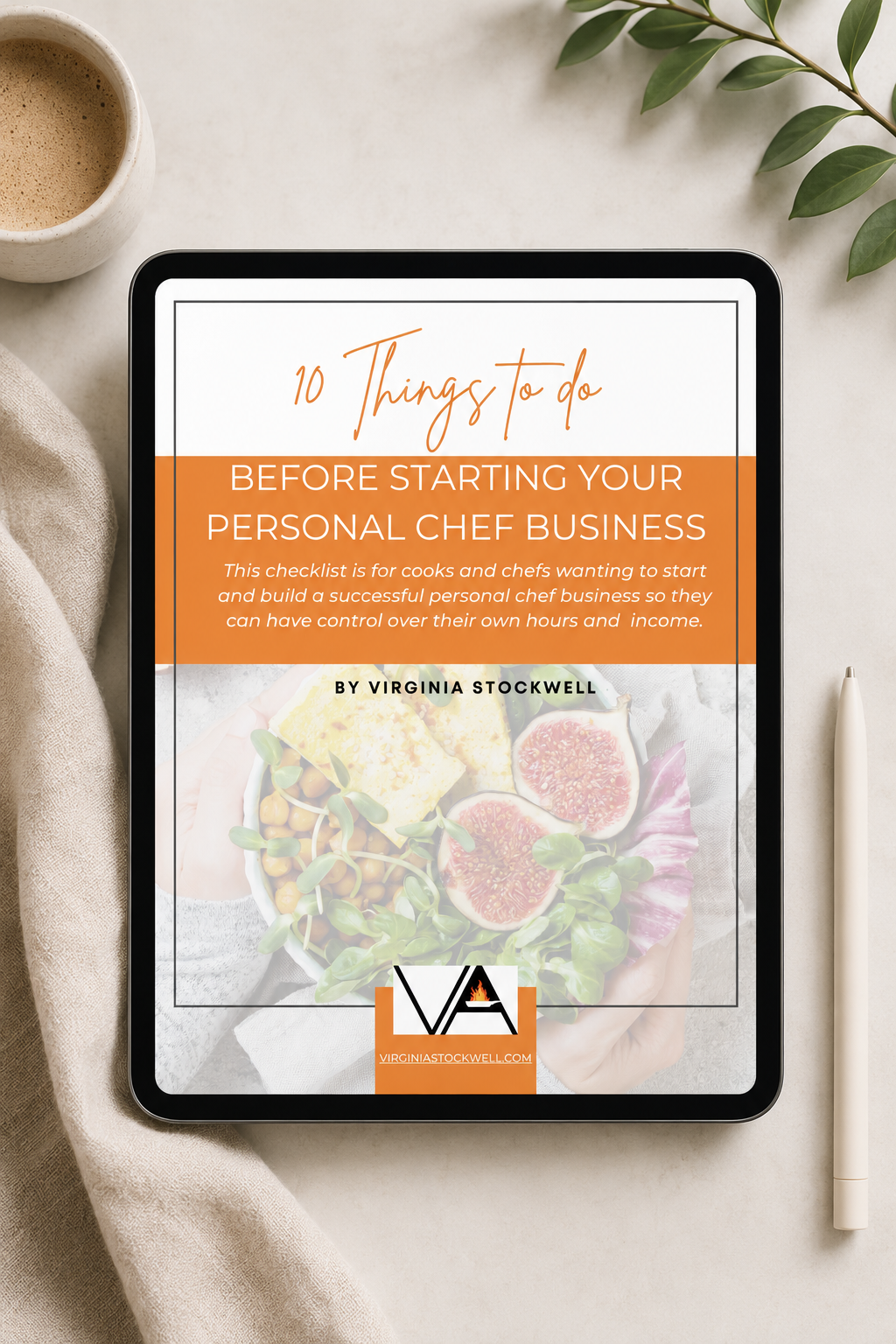
10 Things to Do Before Starting Your Personal Chef Business
Ten-Step Actionable Checklist of things to do before investing in this new business so you're prepared when your first paying client comes along.
for Free
Personal Chef Mentor

Virginia Stockwell
Virginia Stockwell is a personal chef business mentor from California, now living in Austin, TX. She's had careers as a chiropractor and Realtor, then finally found her calling as a personal chef. Starting in catering in 2005, she began her personal chef business in 2012, quickly growing to a waiting list of clients thanks to her local marketing expertise. She now empowers home cooks and professional chefs to start their own meal prep and dinner party businesses, creating a life of hours and income they control. She lives the life of a minimalist both personally and professionally, reads cookbooks like novels, and is locally famous for her taco and margarita parties (check out "A Taco Walks into a Bar" on Amazon).
10-Step Actionable Checklist
FREE DOWNLOAD
10-Step Actionable Checklist
You've always said that "someday" you'll start that meal prep or dinner party business, but where do you begin?