
*Professional Personal Chef vs Amateur Personal Chef

Many new personal chefs assume professionalism comes from cooking skill alone.
Clients evaluate far more than the food.
Before anyone tastes a single bite, they are already forming opinions based on how you communicate, how organized you appear, whether you arrive on time, how your vehicle looks, how quickly you respond to messages, and whether your business feels stable enough to trust inside their home every week.
That process starts almost immediately.
People hiring a personal chef are not simply purchasing dinner. They are bringing someone into their kitchen, around their family routines and personal space. Small operational details influence whether someone feels comfortable continuing the relationship long-term.
Professionalism Changes How Clients Perceive Pricing
Two personal chefs can charge completely different rates while offering similar services.
The difference comes from organization, communication and consistency.
A chef who:
- responds quickly
- arrives on time
- communicates confidently
- maintains organized systems
- follows through consistently
usually feels more established to the client than someone operating casually.
👉Clients often associate organization with reliability. Reliability affects whether someone feels comfortable paying premium pricing repeatedly over time.
First Impressions Begin Before the Door Opens
Clients start evaluating the business before the consultation even begins.
The inquiry process influences perception immediately.
Slow responses, vague pricing conversations, rescheduling repeatedly, or disorganized communication creates distrust quickly. On the other hand, a chef who replies promptly, confirms details, and communicates professionally tends to reduce uncertainty for the client.
The same thing happens during the first in-person meeting.
People notice:
- posture
- clothing
- eye contact
- punctuality
- organization
- tone of communication
These observations happen automatically.
Appearance Influences Trust
A personal chef does not need expensive uniforms or luxury branding to appear established.
Clean shoes, organized equipment, and simple professional clothing influence perception more than a premium logo.
Clients pay attention to details because they are evaluating whether someone appears dependable enough to work inside their home regularly.
Responsiveness Affects Bookings
Response speed influences bookings more than many new chefs expect.
Someone requesting pricing for a dinner party is often contacting multiple chefs simultaneously. Waiting two days to respond gives another business time to secure the event first.
Fast communication does not require long emails.
Even a short response acknowledging the inquiry and providing a timeline for follow-up helps position the business as organized and attentive.
That level of responsiveness tends to separate experienced service businesses from businesses operating casually.
Professional Personal Chefs Become Comfortable Discussing Pricing
Clients can sense when someone sounds uncomfortable presenting pricing.
Confidence around rates develops through repetition. Chefs who negotiate constantly or apologize for pricing often create uncertainty around the value of their services.
Referrals Grow Faster When the Experience Feels Consistent
Clients refer businesses that feel dependable.
Someone who:
- communicates well
- follows through consistently
- arrives prepared
- remembers preferences
- maintains organized systems
becomes easier to recommend confidently to friends and neighbors.
Long-term household service businesses often grow from repeat trust far more than aggressive advertising.
The Difference Between Professional and Amateur Shows Up Operationally
Most clients are not evaluating your knife skills.
They evaluate:
- reliability
- communication
- organization
- punctuality
- confidence
- cleanliness
Those factors shape whether someone feels comfortable hiring you repeatedly.
FAQ
What makes a personal chef look professional?
Clients often associate professionalism with organization, responsiveness, punctuality, communication, presentation, and consistency.
Do personal chefs need uniforms?
Many personal chefs wear simple branded clothing or clean professional attire rather than elaborate chef uniforms.
Why does professionalism affect pricing?
Clients tend to feel more comfortable paying premium pricing when the business experience feels organized, reliable, and established.
Resources
How to Overcome Fear of Judgment and Start Your Personal Chef Business

10 Things to Do Before Starting Your Personal Chef Business
Ten-Step Actionable Checklist of things to do before investing in this new business so you're prepared when your first paying client comes along.
for Free
Personal Chef Mentor

Virginia Stockwell
Virginia Stockwell is a personal chef business mentor from California, now living in Austin, TX. She's had careers as a chiropractor and Realtor, then finally found her calling as a personal chef. Starting in catering in 2005, she began her personal chef business in 2012, quickly growing to a waiting list of clients thanks to her local marketing expertise. She now empowers home cooks and professional chefs to start their own meal prep and dinner party businesses, creating a life of hours and income they control. She lives the life of a minimalist both personally and professionally, reads cookbooks like novels, and is locally famous for her taco and margarita parties (check out "A Taco Walks into a Bar" on Amazon).
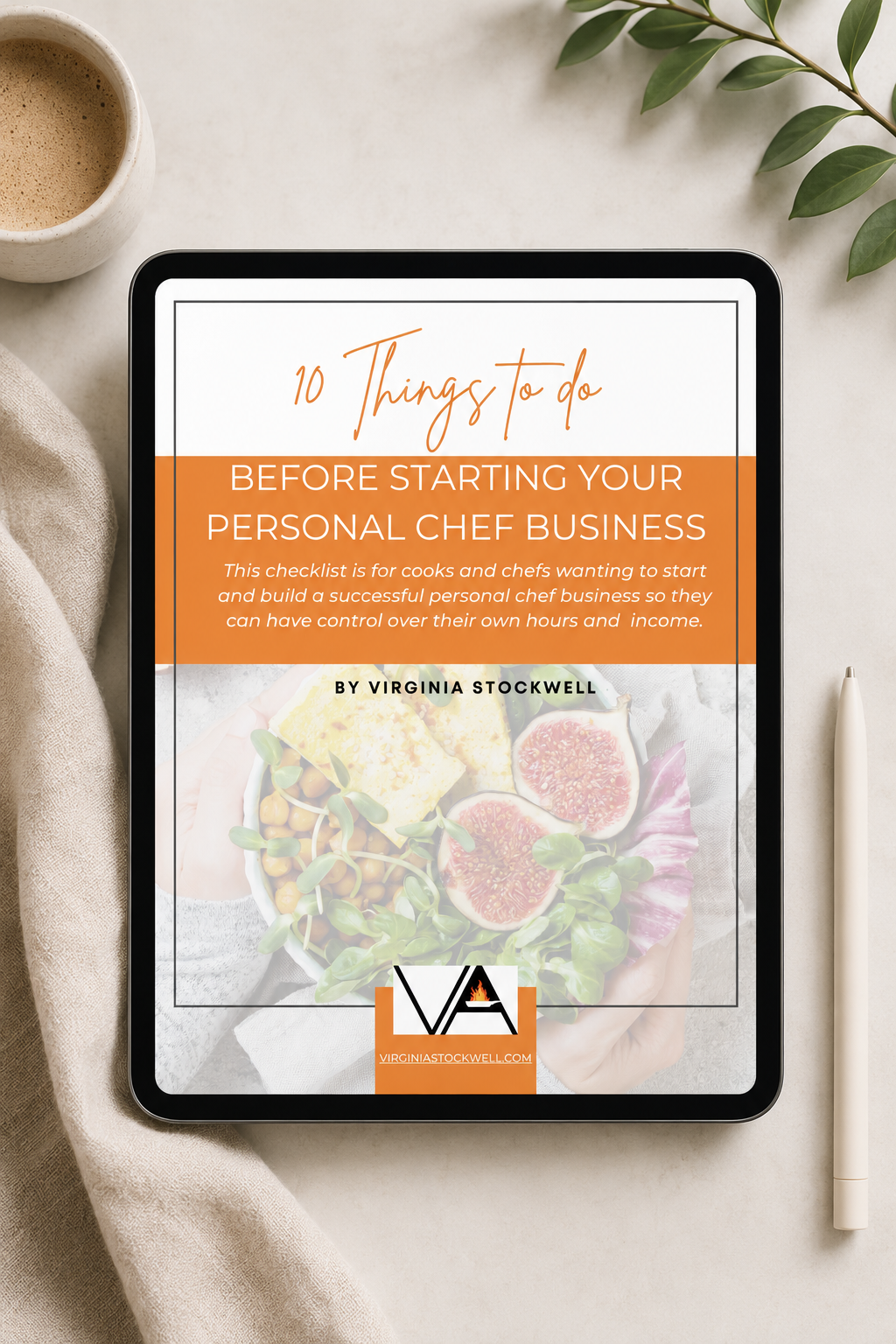
10-Step Actionable Checklist
FREE DOWNLOAD
10-Step Actionable Checklist
You've always said that "someday" you'll start that meal prep or dinner party business, but where do you begin?