
*How Long Can You Work Under the Table as a Personal Chef?

You should not work under the table as a personal chef. Personal chefs handle food, work inside client homes, and operate a business with real liability risks. Operating without a business license or insurance can create legal and financial problems that are far more expensive than setting up your business properly from the beginning.
One of the most common questions aspiring personal chefs ask is:
“How long can I work under the table before making my business legal?”
The short answer is: you should not.
Why Working Under the Table Is Risky
Cooking professionally involves liability.
Consider situations like:
- A client has a severe food allergy
- You accidentally damage the client’s home
- You injure yourself during a cook session
- A client claims food-related illness
These situations are uncommon, but they are the reason professional businesses protect themselves legally and financially.
Personal Chefs Need Liability Insurance
Liability insurance is one of the most important...
What part-time job could I do while building my personal chef business?

In case you don't already know, you can’t decide to become a personal chef today, then start full-time tomorrow.
Not only do you have to work at building a clientele, but you also need time to build up systems of efficiency in your business.
Part of building your business could be gaining experience and education by working with other food service companies as you get your personal chef business off the ground. Of course you could work in restaurants, but have you considered applying at local catering companies or banquet halls? Caterers often have a high staff turnover, so if you can show up and become a reliable, active employee who wants to learn more, you will do well.
I must emphasize that working in the kitchen is not the only place to learn from another food service company.
Being a personal chef is not just about cooking well. Being a personal chef is also about offering a service. Working front of house at a catering company will allow you direct int...
*Concentrate on the Business, Not the Business Cards
A lot of new personal chefs spend more time adjusting branding assets than speaking to potential clients.
I’ve seen new chefs pour hours into logos, website colors, Canva graphics, chef coat embroidery, and business card details before they have tested pricing, practiced consultations, or started building referral relationships.
Meanwhile, chefs with basic branding often move faster because they are learning from paying clients. They are hearing objections, noticing what households request repeatedly, adjusting menus, refining scheduling, and figuring out how the business works once someone is actually paying for the service.
A brand can support a business. It cannot replace one.
How Personal Chef Businesses Get Clients Early On
Most personal chef businesses begin through:
- referrals
- conversations
- local relationships
- repeat clients
- word-of-mouth marketing
Very few families hire a meal prep chef because the branding package looked expensive.
They hire someone who:
- resp ...
*Why Personal Chef Menus Should Be Customized for Each Client
One of the most common questions potential personal chef clients ask is:
“Can you send over a sample menu?”
The request sounds simple, but most experienced personal chefs do not rely on one standard menu for every client.
Meal prep clients hire personal chefs because they want meals customized to their household, preferences, schedule, and dietary needs.
Why One Sample Menu Usually Does Not Work
Different families eat very differently.
One household may:
- avoid gluten
- dislike tomatoes
- need higher protein meals
- prefer repeated weekly meals
Another may:
- eat plant-based
- have nut allergies
- want low-sodium meals
- prefer more variety throughout the week
A single menu does not accurately represent how a personal chef service operates in real client homes.
Seasonality also affects menu planning. Produce availability changes throughout the year, which means menu options naturally evolve over time.
What Clients Are Really Looking For
When clients ask for a sample menu, t...
*Why You Keep Hesitating to Start Your Personal Chef Business

A surprising number of aspiring personal chefs spend years researching the business without ever putting themselves in front of a paying client. They read about pricing, kitchen workflow, marketing, scheduling, meal prep containers, liability insurance, social media, and business licenses. At some point, the issue stops being lack of information.
The hesitation usually comes from risk.
Starting a personal chef business changes how you earn money, structure your week, and think about stability. Even small steps such as posting your services publicly or booking a first consultation can trigger resistance because the business suddenly feels real instead of hypothetical.
Why Hesitation Starts Showing Up
Most people do not experience self-sabotage as obvious panic or fear. It usually sounds reasonable.
You convince yourself that you need:
- more experience
- better timing
- additional certifications
- another month to think about pricing
- a better website before taking clients
Some of...
*How to Overcome Fear of Judgment and Start Your Personal Chef Business

Fear of judgment can stop aspiring personal chefs from getting clients, talking about their services, or starting their business at all. Worrying about what other people think often leads to overthinking, hesitation, and delaying action.
If you are delaying starting your personal chef business because of fear, you are not alone.
Fear of judgment is often connected to the desire to be liked by everyone all the time.
That is impossible.
Why Fear of Judgment Feels So Strong
When someone judges you, their comment may stay with you far longer than it stays with them.
Words can affect confidence and shape how you see yourself.
Over time, negative experiences or criticism can make people afraid to:
- Try something new
- Put themselves out there
- Start a business
- Take risks
This is one of the biggest mental barriers people face when starting a personal chef business.
The Secret to Overcoming Fear of Judgment
The key is becoming comfortable with both your strengths and weaknesses.
...
10 Things to Do Before Starting Your Personal Chef Business
Ten-Step Actionable Checklist of things to do before investing in this new business so you're prepared when your first paying client comes along.
for Free
Personal Chef Mentor

Virginia Stockwell
Virginia Stockwell is a personal chef business mentor from California, now living in Austin, TX. She's had careers as a chiropractor and Realtor, then finally found her calling as a personal chef. Starting in catering in 2005, she began her personal chef business in 2012, quickly growing to a waiting list of clients thanks to her local marketing expertise. She now empowers home cooks and professional chefs to start their own meal prep and dinner party businesses, creating a life of hours and income they control. She lives the life of a minimalist both personally and professionally, reads cookbooks like novels, and is locally famous for her taco and margarita parties (check out "A Taco Walks into a Bar" on Amazon).
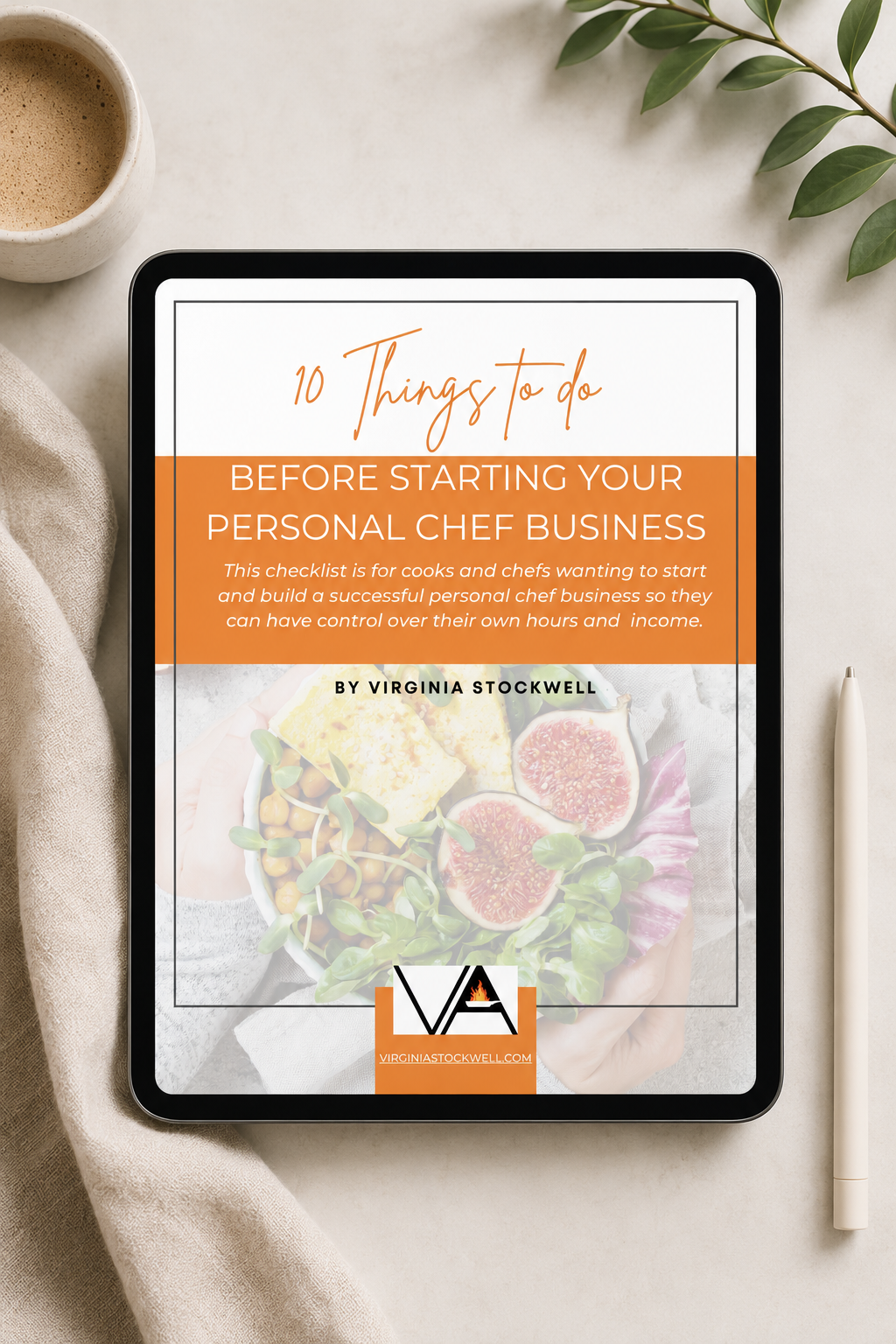
10-Step Actionable Checklist
FREE DOWNLOAD
10-Step Actionable Checklist
You've always said that "someday" you'll start that meal prep or dinner party business, but where do you begin?